The Kuhn Company · Quenched Earth Engineering is a proposed brand

FIRE, WATER & LANDSCAPE RESILIENCE

Water-wise landscapes.
Layered fire resilience.

A living landscape can support habitat, use water thoughtfully and reduce avoidable fire exposure. Hydration is one part of that work, alongside the home itself and the way vegetation is arranged and maintained.

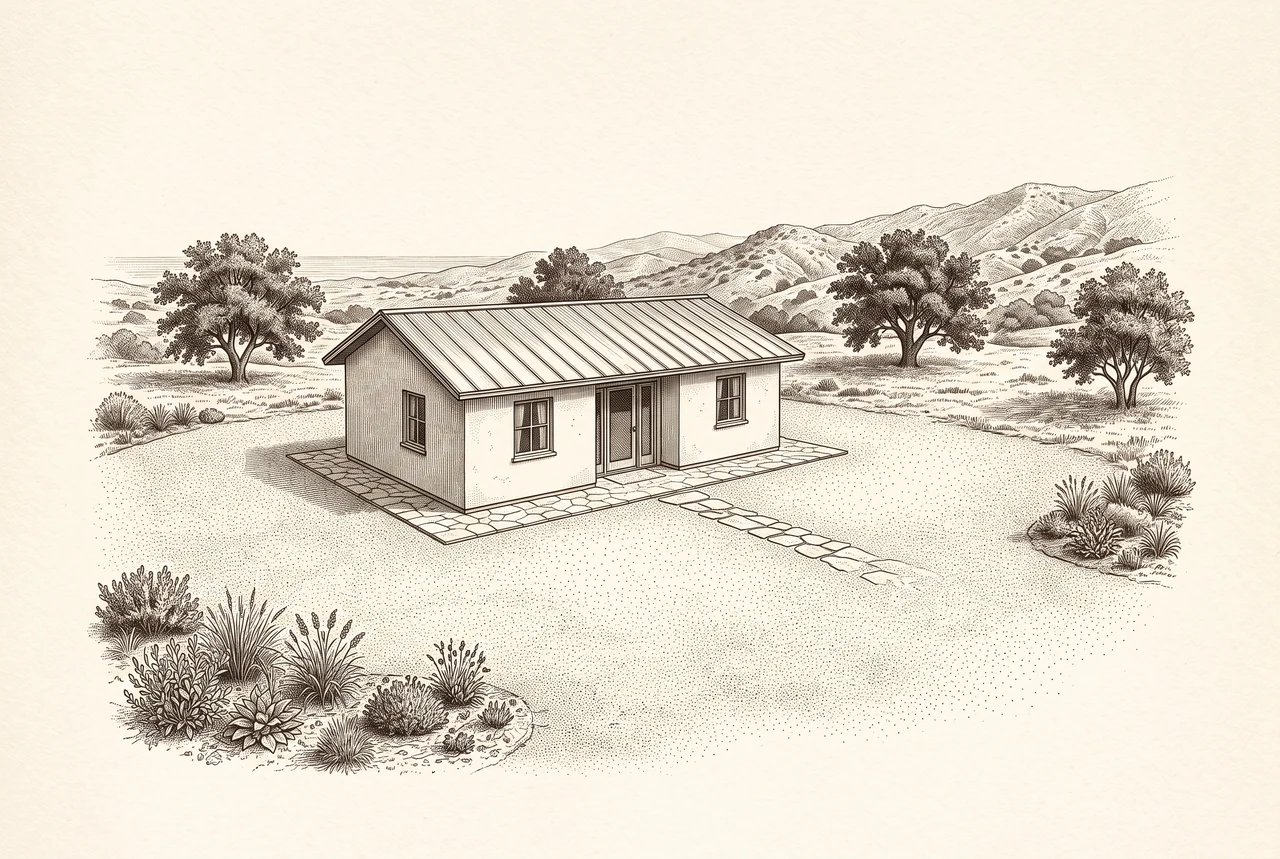
Conceptual sepia engraving of a home surrounded by a broad bare gravel and stone apron, with separated planting farther away.

AI-generated conceptual illustration. An imagined property, not a completed project or site-specific design. No landscape is fireproof.

  • Harden the home
  • Keep immediate surroundings noncombustible
  • Manage vegetation spacing and dead fuel
  • Maintain plant health and ongoing care

Prioritize the first five feet around structures and decks; confirm current local fire requirements. The illustration does not show every home-hardening detail or establish compliance.

UNDERSTAND THE ECOLOGY

Fire has a role.
Context matters.

Fire has long shaped California ecosystems. Its effects depend on the vegetation, weather, season and time between burns. Chaparral has a different fire history from many forests: some shrubs recover by resprouting, while others rely on stored seed.

Fires repeated before plants replenish that seed bank can damage recovery and favor invasive grasses. Respecting fire ecology means avoiding one-size-fits-all clearing or burning prescriptions and managing risk around the places people live.

UC ANR: Southern California fire ecology

KEEP THE WHOLE SYSTEM IN VIEW

Hydrated plants.
Managed fuels.

Moisture in living leaves and stems can influence how vegetation burns. Species-appropriate irrigation can support plant condition, but plant size, dead material, spacing and local fire weather also matter.

Green plants can still burn under sufficient heat. Dry leaves and small dead twigs can dry quickly, so a moist root zone does not remove the need to clear dead fuel, maintain separation and protect buildings from embers.

UC IPM: Minimizing landscape fire hazards
RESEARCH & FURTHER READING

Learning from
Greg Rubin’s work.

Research context, not an endorsement or affiliation.

California native-landscape designer Greg Rubin has documented landscapes exposed to wildfire and emphasized maintenance and appropriate supplemental irrigation. His observations offer useful questions for site-specific design.

Rubin also coauthored a 2020 study with Jon Keeley, Teresa Brennan and Bernadette Piffard. For most species studied, lightly irrigated native shrubs held more live-fuel moisture through summer and fall than comparison treatments. Moisture and vegetation structure informed predicted fire behavior.

That research measured plant moisture and modeled fire behavior. Neither modeling nor individual landscape case histories guarantee that a home will survive a wildfire.

Read the 2020 study summary at USGSRead Rubin’s 2025 first-person reflections

START AT THE HOME, WORK OUTWARD

Design the layers.
Maintain the details.

Planting alone cannot address ember exposure or building vulnerabilities. Coordinate landscape planning with home-hardening measures and current local fire guidance.

01 / THE IMMEDIATE EDGE

Make it noncombustible.

Prioritize appropriate hardscape in the first five feet around structures and decks. Keep vegetation, combustible mulch and accumulated debris out of this immediate area. Confirm the applicable requirements with the local fire authority.

02 / THE PLANTED LANDSCAPE

Break the fuel paths.

Remove dead material and maintain separation between plant groups. Interrupt ladder fuels that connect ground vegetation to tree crowns. Spacing should respond to slope, mature plant size and local guidance.

03 / THE LONG TERM

Care is part of the design.

Monitor plant condition, clear debris and keep irrigation working. Choose site-appropriate plants, including suitable California natives, within the water and maintenance resources available.

The first-five-feet treatment shown here is a design priority. State rulemaking and local requirements can change; verify the current requirements for the actual property.

CAL FIRE defensible-space guidanceCurrent Board of Forestry Zone 0 informationHome-hardening guidance

PLAN FOR THE DRY SEASON

A water budget.
A maintenance plan.

Rainwater storage, suitable passive capture and permitted graywater irrigation can contribute to landscape water needs. Their value depends on seasonal supply, storage capacity, soil, planting and maintenance. Winter rain alone may not cover a long dry summer.

Plan for shortfalls without overwatering. Keep infiltration and overflow away from foundations, septic systems and other sensitive areas. Graywater needs its own compliant distribution; it is not an overhead fire-sprinkler supply.

No landscape is fireproof. Irrigation does not replace defensible space, home hardening or emergency preparedness.

Explore integrated water planning

SITE-SPECIFIC COORDINATION

Bring the whole site
into the conversation.

Coordinate civil, landscape and fire-safety expertise around the property’s actual conditions.

Discuss your site